

Socratic Questioning
Socratic questioning is a dialogue method named after the philosopher Socrates. It uses open-ended questions and probing follow-ups to challenge assumptions, deepen understanding, and stimulate critical thinking. Think of it as a collaborative journey of discovery, uncovering knowledge through thoughtful conversation.

Funnel Technique
The Funnel Technique is a method of questioning that starts with broad, open-ended questions and gradually narrows down to specific inquiries. It is used to explore a topic comprehensively while maintaining engagement and depth, making it effective for interviews, consultations, problem-solving sessions, and investigative processes.
Questioning Levels
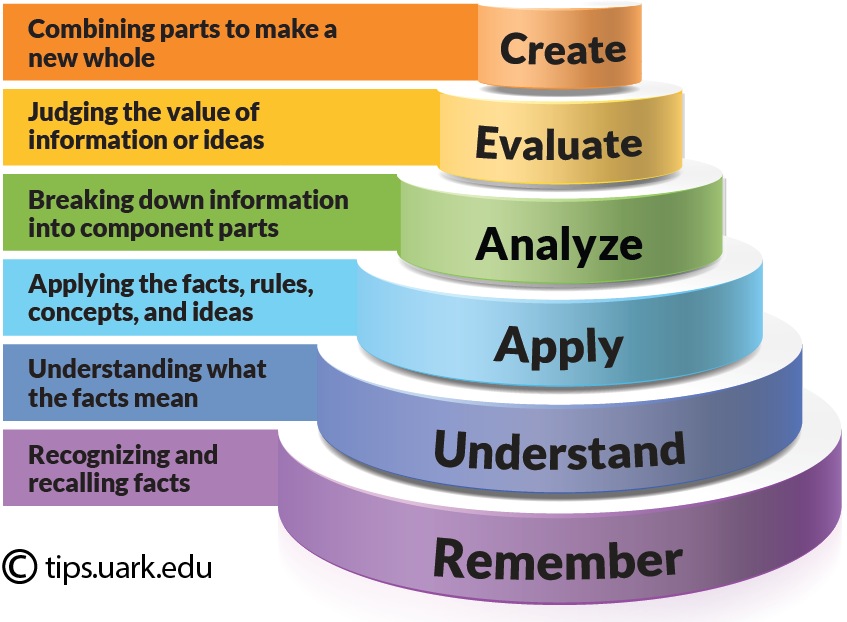
The “Questioning Levels” technique categorizes questions based on cognitive complexity, ranging from remembering and understanding to applying, analyzing, evaluating, and creating. This structured approach guides inquiry, promotes critical thinking, and assesses understanding across various educational, training, problem-solving, and interviewing contexts.

GROW model
The GROW model is a simple 4-step framework for goal setting and problem-solving: (G) Define your Goal, (R) Assess your Reality, (O) Explore Options/Obstacles, and  Determine your Will (action plan) to move forward. It helps individuals and teams clarify goals, overcome challenges, and achieve success.
Ladder of Inference
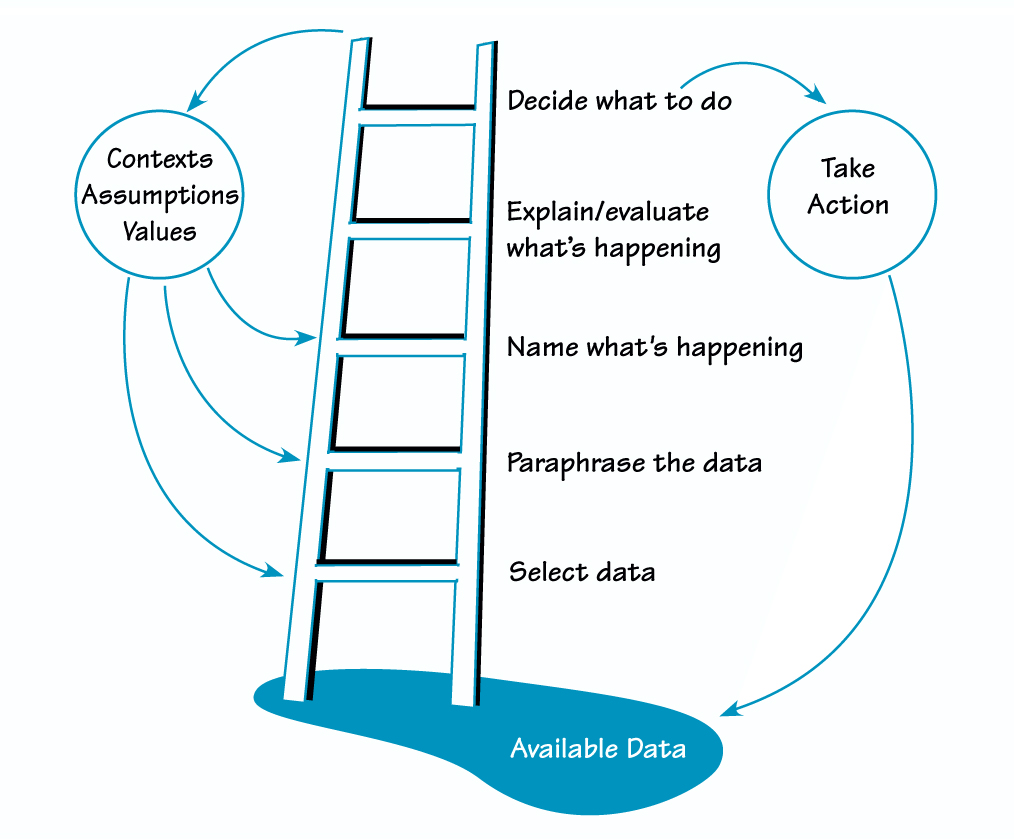
We make sense of the world by climbing an invisible Ladder of Inference. Starting with basic observations, we climb by interpreting what we see, filling in gaps with assumptions, and drawing conclusions. These conclusions solidify into beliefs, ultimately influencing our actions. By being aware of the Ladder of Inference, we can climb more consciously, questioning our assumptions, seeking diverse perspectives, and ultimately making choices based on clearer understanding.

Six Thinking Hats
The 6 Thinking Hats model encourages diverse thinking by assigning different “hats” (perspectives) like “Yellow” (optimistic) or “Black” (cautious). By switching hats, individuals or teams can explore a problem from various angles, leading to more informed decisions and creative solutions.
 productbits