RICE Score
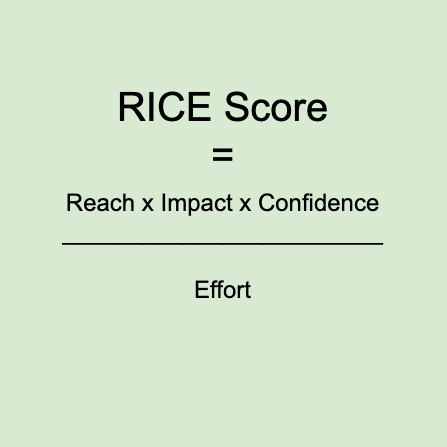
RICE stands for Reach, Impact, Confidence, and Effort. The RICE framework helps product managers make informed decisions by considering four factors: how many users it will impact, how much it will impact, how confident the team is in their estimates, and how much effort it will require. The RICE score is calculated by multiplying these four factors together. A higher RICE score indicates a higher priority project.
MoSCOW method
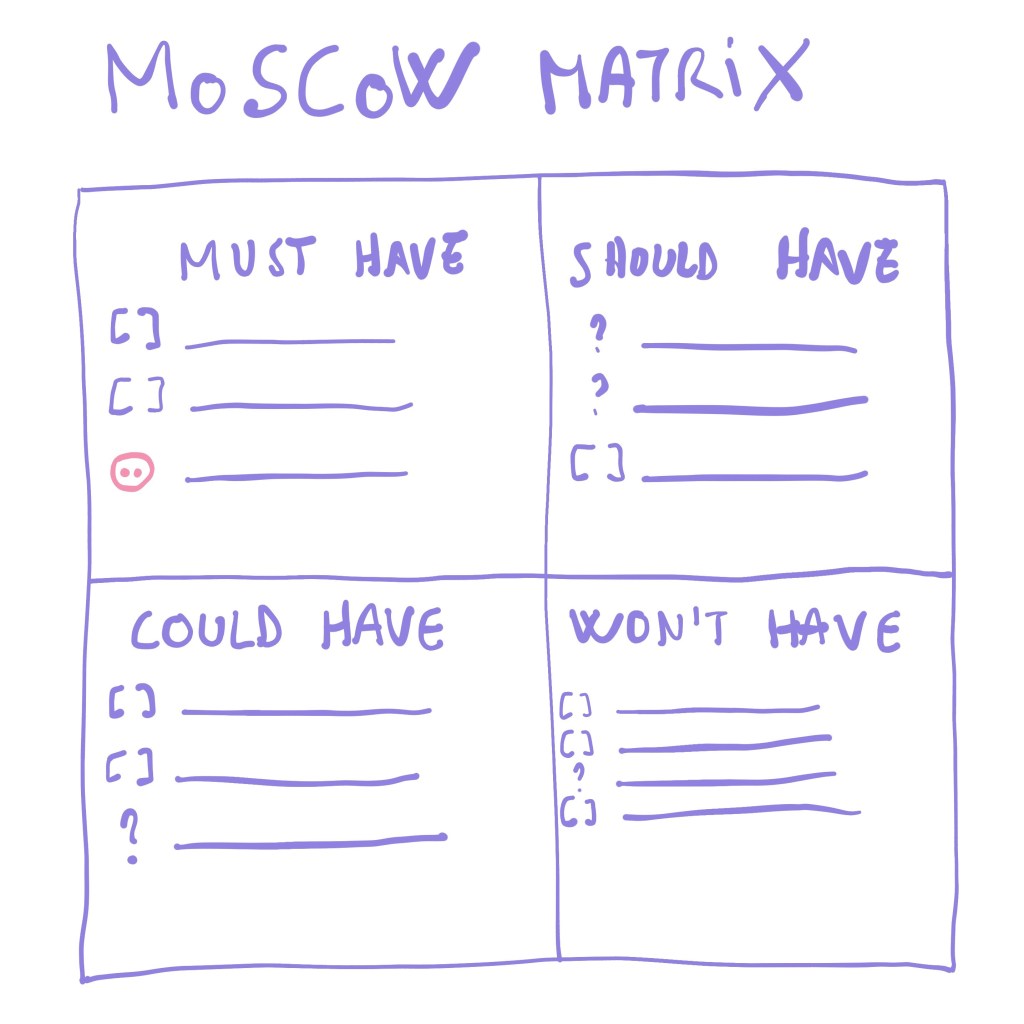
The MoSCoW framework divides requirements into four categories: Must-Have, Should-Have, Could-Have, and Won’t-Have.

KANO model
The Kano Model categorizes features into 5 types based on how they affect customer satisfaction. By understanding these categories, product teams can focus on features that will have the biggest impact on customer satisfaction.
Effort vs Impact
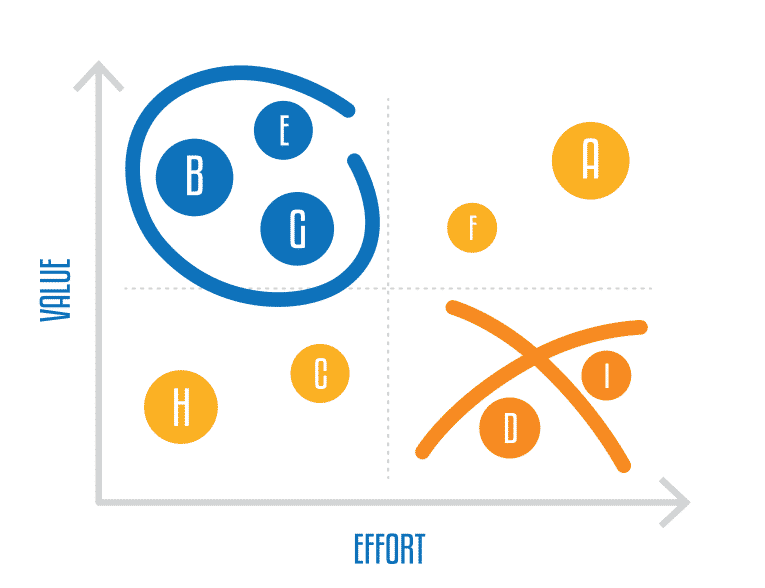
This framework helps product managers decide which features to work on by considering the value they will bring to the user and the complexity of implementing them.

ICE Score
The ICE framework is a method for scoring features based on three factors: impact, confidence, and ease. Impact is the potential benefit of the feature, confidence is the certainty that the feature will be successful, and ease is the difficulty of implementing the feature.

Eisenhower matrix
It discusses how to prioritize tasks by urgency and importance. The Eisenhower Matrix was created by Dwight D. Eisenhower. There are four quadrants: Do First, Schedule, Delegate, and Don’t Do.
 productbits